Have you ever looked at a shiny new office tower or a cozy suburban house and wondered how they were built? Construction is a big field, but it usually falls into two main types: residential and commercial. So what’s the real difference?
Put simply, residential construction builds places where people live, and commercial construction builds places where businesses run and the public visits. Both types take a lot of skill, careful planning, and strong materials, but the building’s main job affects everything-from the plans to the final paint.
Knowing the difference matters whether you’re a homeowner planning a new build or a business owner setting up a new store. It can also help explain why building upkeep-like knowing when you need a roof replacement-can vary a lot in size and cost between the two.
These differences aren’t just technical details. They affect who works on the project, what the building is made of, and how the job is managed. Let’s take a closer look at what makes each type special and the main things that set them apart.
Residential vs. Commercial Construction: What Sets Them Apart?
At a quick glance, a building might seem like just a building. But once you think about what it will be used for, the differences start adding up. Residential construction is personal. It focuses on comfort, safety, and making a place feel like home for a person or family. Commercial construction is different. It is driven by use, efficiency, and what a business or public space needs. It’s about building a place for work, shopping, services, or gatherings.
Because the purpose is different, you often see big changes in project size, difficulty, rules and permits, materials, and how teams plan the work. Both aim for safe, quality results, but the goals and day-to-day challenges can be very different.
What Is Residential Construction?
Residential construction means building or improving homes-places where people relax, grow their families, and live their daily lives. This type of work is closely tied to personal needs and style, with a focus on spaces that feel safe, comfortable, and welcoming.
Types of Residential Buildings
Residential construction covers many kinds of housing. The most common is the single-family home, which stands on its own and often has a private yard. There are also multi-family homes with separate units that share walls, such as duplexes, triplexes, and fourplexes. Townhouses, often built in groups, also fit here.
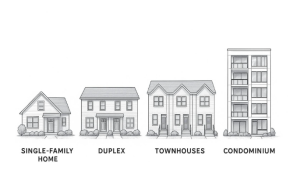
Other common options include condominiums, where people own their unit in a larger building, and apartments, which are rented units in multi-unit buildings. Mobile homes, student dorms, and co-ops also count as residential. That said, very large apartment buildings can sometimes be treated more like commercial projects because of their size, the systems required, and the fact that they are run as a rental business.
Common Features and Uses
Residential buildings are shaped around the needs of the people living inside. Comfort is a big priority, so designs often focus on appearance, personal style, and a home-like feel. Energy savings also matter since homeowners want lower utility bills, which can affect choices like insulation, air sealing, and windows. Builders often work closely with homeowners, architects, or developers to match layouts, paint colors, fixtures, and finishes to specific preferences.
Safety is always required, and residential codes help confirm a home is built to last. These homes need plumbing, wiring, and HVAC systems sized for family use-not for the constant foot traffic you see in many commercial buildings.
What Is Commercial Construction?
Commercial construction focuses on building spaces used for business, public use, or other organizations. These buildings support many parts of daily life, from shopping and offices to hospitals and other services.
Types of Commercial Structures
Commercial buildings come in many forms. This includes office towers, shopping malls, retail centers, and smaller storefronts. Industrial properties are also common, such as manufacturing plants, warehouses, cold storage, and distribution centers. Healthcare buildings like hospitals and clinics are major commercial projects, along with restaurants, hotels, and motels.
Other examples include storage facilities, movie theaters, parking garages, and schools, colleges, and universities. Churches and other worship spaces are often included because they are places where the public gathers. Also, some areas like industrial construction (such as data centers) and infrastructure (like bridges and highways) are separate specialties, but they often share the same large scale and high difficulty as commercial work.
Common Features and Uses
Commercial buildings are built for heavy use and lots of people. The main focus is durability, safety, and practical use. The goal is to create spaces that work well for the business or service and can handle constant activity.
Many commercial buildings include elevators, large HVAC systems, and advanced security. Looks can matter too-especially for businesses that want to attract customers-but long service life, easier upkeep, and meeting strict codes are usually the top goals.
These buildings are made to do a job, and the design choices support that job. Nova Construction Services delivers commercial builds that meet these demands with precision and reliability.
8 Major Differences Between Residential and Commercial Construction
The gap between residential and commercial construction is easier to see when you compare the main areas where they differ. These are not small details-they affect planning, building, and legal requirements.
1. Purpose and Usage
This is the main difference. Residential buildings are made for people to live in, with comfort, privacy, and personal style playing a big role. Commercial buildings are made for business or public use. They usually support work, sales, services, or gatherings, and are often built to help an organization run smoothly and earn income. Because of this, commercial design often focuses more on function and movement for larger groups of people.
2. Project Scale and Complexity
Commercial projects are usually bigger and harder than residential projects. A single home or a small group of townhouses is often a more contained job. Commercial jobs might include large shopping centers, multi-story offices, or hospitals. These need detailed planning, more engineering, and strong project management to schedule many specialized crews. The size and the building systems-like larger HVAC, plumbing, and electrical-add to the difficulty.
3. Licensing, Codes, and Permits
Both types must follow building codes and get permits, but commercial work usually has more rules and more steps. Residential codes focus on safe living conditions: structure, basic wiring, plumbing, insulation, and HVAC. Commercial projects often need approval from more groups, like zoning boards, planning departments, and building officials. The codes can be stricter, covering fire safety, disability access (ADA), higher load limits, exit routes, and more complex mechanical systems. Commercial contractors may also need specific licenses and certifications for large projects.
4. Construction Materials
Materials are another big difference. Residential buildings often use wood framing, brick, and concrete. These materials can be cost-friendly, easier to change for design needs, and a good fit for home style and energy savings. Commercial buildings often rely more on steel, reinforced concrete, and large glass sections. These materials support bigger loads, handle more wear and tear, and help meet tougher safety rules like fire resistance. They can cost more upfront, but they are chosen to last longer and often need less upkeep over time.
5. Equipment Requirements
The equipment on-site often shows what type of job it is. Residential builds usually use smaller tools and equipment, like drills, saws, ladders, and small mixers. For bigger residential work, compact excavators or small bulldozers may be used, but the gear is still sized for smaller lots. Commercial sites often need much larger machines due to the building size and heavier materials. It’s common to see cranes, large excavators, bulldozers, forklifts, and paving equipment. Running this equipment usually requires special training and licensing.
6. Design Customization
Residential projects usually allow more personal design choices. Homeowners often decide layouts, room sizes, special features, colors, and many finishes. The goal is a living space that fits a specific person or family. Commercial projects can include design features, but they often have less flexibility because function, efficiency, and code compliance come first. Changes also must be planned carefully so they don’t break the budget, schedule, or permit requirements.
7. Construction Costs and Funding
Commercial construction usually costs a lot more than residential construction. A residential build may average around $150 per square foot, with the national average cost to build a house (not counting land) around $329,000. These projects are often paid for by homeowners through savings or bank loans, though some housing can be funded by government or non-profits. Commercial construction can range from about $240 to $870 per square foot and often goes over $1 million total. Higher costs come from larger scope, heavier materials, special equipment, stricter codes, higher labor costs, and more complex building systems. Funding often comes from developers, companies, property owners, or government agencies, usually with large loans and investment deals.
8. Project Timelines and Deadlines
Residential projects often take less time than commercial ones. Many home builds take several months, and an average house may take seven to twelve months. Changes from the homeowner can add time, but the schedule is usually shorter than large commercial work. Commercial projects often take much longer-sometimes years-because of their size, phased work (site prep, foundation, structure, interiors), and longer approval processes. Deadlines can be a bigger pressure in commercial work because delays can cost investors money and disrupt business plans.
How to Choose Between Residential and Commercial Construction for Your Project
Picking the right type of construction is not just about how big the building will be. It’s about matching your goals, budget, and expectations to what each type of project requires. Deciding early can help you avoid expensive delays and surprises.
Key Factors to Consider
Start with the building’s main purpose. Will it be a home, or will it be used for business or public use? That answer shapes most other choices.
Next, think about size and how difficult the project will be, since that affects materials, equipment, and the type of crew you need. Budget matters as well-commercial projects usually need a much larger investment because of scale and regulations.
Also think about how much design freedom you want. If you want lots of personal style choices, residential work usually offers more options. Finally, think about long-term plans. Is the property mainly for personal use, or is it meant to produce business income?
Assessing Skills and Experience
Choose a construction company that has strong experience in the type of project you are planning.
Residential builders focus on building comfortable homes and working closely with homeowners.
Commercial builders often have more experience with strict rules, larger crews, and complex designs for public or business use. They also understand the needs of facilities like hospitals, factories, or large retail spaces.
Picking a contractor with proven experience in the right category is a major part of keeping your project safe and successful.
Budget and Long-term Goals
The money side of residential and commercial construction can be very different. Residential builds are still a big cost, but homeowners often have more control over spending because the projects are smaller and use more standard materials.
Commercial work often requires tighter budgeting for permits, heavy-duty materials, skilled crews, project managers, and large equipment. Businesses also must plan for strict safety checks and longer schedules.
Whether you are building a dream home or investing in a business property, your long-term goal should shape your budget plan and your choice of builder. Knowing the cost differences and typical funding methods helps the project go more smoothly.
Frequently Asked Questions About Residential and Commercial Construction
Construction can bring up a lot of questions, especially when you are trying to understand the difference between residential and commercial work. Here are a few common questions and clear answers.
Are building codes stricter for commercial projects?
Yes. Commercial building codes are usually stricter and more detailed than residential codes. This is because commercial buildings are often larger, hold more people, and support many different activities.
Commercial codes cover fire protection, ADA access, stronger structural needs for heavier loads, more complex mechanical systems, and specific exit and evacuation requirements. Residential codes focus on safe living conditions, while commercial rules are built to protect the public and larger financial investments.
Can a construction company do both residential and commercial work?
Yes. Many companies work in both areas, but it often requires different skills, licenses, and sometimes separate teams. A general contractor may be able to do both, but certain project types can require extra certifications or training.
To do both well, a company needs to understand different permit systems, material needs, equipment use, and client expectations. Companies that handle both usually have strong project management and teams with varied experience.
What insurance is required for each type?
Both residential and commercial projects need strong insurance coverage, but commercial work often needs larger and more detailed policies. Basic coverage like Workers’ Compensation and General Liability is standard for construction.
Commercial projects often require higher limits because the sites are bigger, the equipment can be more dangerous, the risk of theft can be higher, and more members of the public may be involved. Commercial policies may also cover specialized work and possible business interruption.
Because the financial and safety risks are often higher on commercial jobs, the insurance requirements are usually broader and stricter.